



What’s Inside the 2026 Toyota 4Runner and How Much Can It Carry
The 2026 Toyota 4Runner is one of those SUVs that can wear a lot of hats. It’ll take you through rocky trails on Saturday and handle the school pickup line on Monday without breaking a sweat. But if you’re shopping for a family-sized ride, you’ve probably wondered about seating capacity and whether a third row is part of the deal. So, do Toyota 4Runners have 3rd row seating? The short answer is yes, but only on certain trims.
- The 2026 4Runner offers available third-row seating on the SR5 and Limited trims, bringing total passenger capacity to seven.
- Two-row models provide up to 90.2 cubic feet of cargo space with the rear seats folded flat, while three-row versions max out at 84.8 cubic feet.
- Tech upgrades include an available 14-inch touchscreen, wireless Apple CarPlay and Android Auto, and a 14-speaker JBL premium audio system on higher trims.
How Many Seats in a Toyota 4Runner?
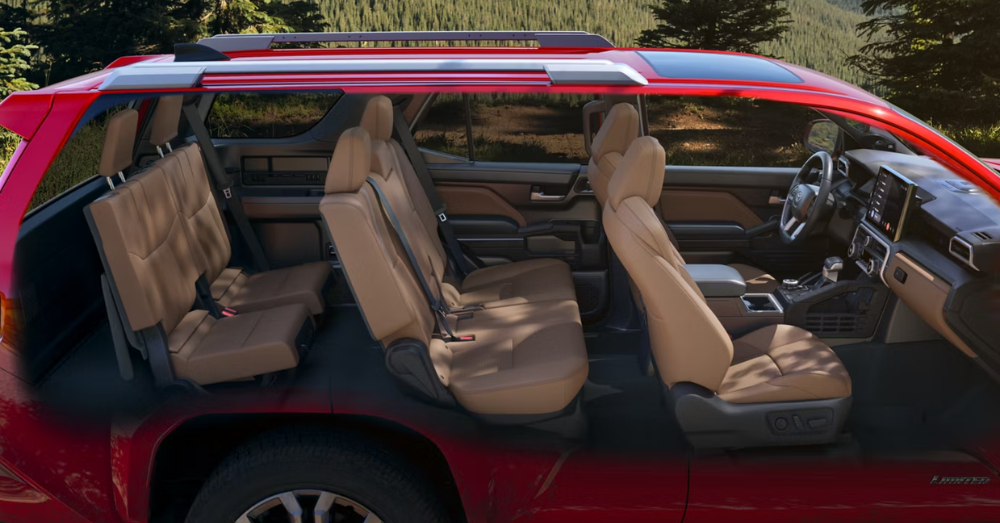
Most 2026 4Runner configurations seat five passengers across two rows. The front row gives you 41.8 inches of legroom, and the second row offers 34.8 inches, which works well for adults on longer drives. If you need room for more people, the SR5 and Limited trims offer an optional third row, bumping total seating to seven. That third row provides 31.8 inches of legroom, making it a better fit for kids or shorter trips rather than cross-country hauls with full-grown adults. Toyota prices the option at $1,330 on the Limited trim.
What the Cabin Actually Feels Like
Toyota gave the sixth-generation 4Runner’s interior a serious upgrade when it redesigned the SUV for 2025, and the 2026 model carries all of that forward. The dashboard borrows some design cues from the Tacoma, but the overall feel is more polished. Large, glove-friendly dials and toggle-style switches make sense when you’re bouncing down a dirt road, and a sturdy front-passenger grab handle is a nice touch for trail rides.
Seat materials depend on your trim. The SR5 starts with durable cloth upholstery. Step up to the TRD Sport Premium or TRD Off-Road Premium, and you get SofTex-trimmed seats with heating and ventilation. The Limited wraps everything in leather, adds a heated steering wheel, and includes memory settings for the driver’s seat and mirrors. Dual-zone automatic climate control comes on most trims above the base SR5.
Cargo Space That Actually Works
This is where the 4Runner really flexes. In two-row form, you’re looking at 48.4 cubic feet of cargo room behind the second row. Fold those seats down using Toyota’s tumble-fold system, and that number jumps to 90.2 cubic feet. That’s enough room for a full camping setup, mountain bikes, or a serious hardware store haul.
Three-row models sacrifice some of that space. With the third row up, you only get 12.1 cubic feet of cargo space behind it. Fold both rear rows, and you’re still at a respectable 84.8 cubic feet. Hybrid buyers should know that battery placement raises the cargo floor, dropping maximum cargo to 82.6 cubic feet in the two-row hybrid layout.
A fan-favorite feature that’s been around for decades is the power rear window. It rolls down into the tailgate with the push of a button, letting you slide longer items through without opening the whole liftgate.
Tech and Infotainment Inside the 2026 4Runner
The tech package depends on your trim choice. The SR5 and TRD Sport come with an 8-inch Toyota Audio Multimedia touchscreen. Move up to the TRD Sport Premium, Limited, Platinum, or TRD Pro, and you get a 14-inch touchscreen that’s easy to read and responds quickly.
Every 2026 4Runner includes wireless Apple CarPlay and Android Auto as a standard feature. You also get a digital key system that lets you lock, open, and start the vehicle from your phone. Higher trims add a 12.3-inch digital gauge cluster that you can customize to show trip data, off-road metrics like pitch and roll angles, or hybrid system info on i-FORCE MAX models.
Music lovers will appreciate the available 14-speaker JBL Premium Audio system with a subwoofer, amplifier, and a portable JBL FLEX Bluetooth speaker that docks right into the dashboard. The rear cargo area even has its own speakers for when you’ve got the tailgate down at a campsite. Wireless phone charging and a head-up display round out the available tech options.
Quick Reference Guide: 2026 Toyota 4Runner Interior Specs
| Feature | Specification |
|---|---|
| Seating Capacity | 5 standard, up to 7 with available third row (SR5 and Limited) |
| Front Legroom | 41.8 inches |
| Second-Row Legroom | 34.8 inches |
| Third-Row Legroom | 31.8 inches |
| Cargo Behind 2nd Row (Two-Row) | 48.4 cubic feet |
| Max Cargo, All Seats Folded (Two-Row) | 90.2 cubic feet |
| Cargo Behind 3rd Row (Three-Row) | 12.1 cubic feet |
| Max Cargo, All Seats Folded (Three-Row) | 84.8 cubic feet |
| Max Cargo, Hybrid (Two-Row) | 82.6 cubic feet |
| Infotainment Screen | 8-inch standard, 14-inch available |
| Audio System | Standard speakers, available 14-speaker JBL Premium Audio |
| Smartphone Integration | Wireless Apple CarPlay and Android Auto (standard) |
| Climate Control | Dual-zone automatic on most trims |
| Seat Materials | Cloth (SR5), SofTex (mid trims), Leather (Limited, Platinum) |
| Power Rear Window | Standard across all trims |
Picking the Right Setup for Your Needs
If you’re primarily hauling gear for weekend adventures, the two-row Toyota 4Runner gives you the most flexibility with 90.2 cubic feet of total cargo room. Families who occasionally need extra passenger seats should look at the SR5 or Limited with the third-row option, keeping in mind you’ll trade some cargo space for those additional seats. And if fuel economy matters, the i-FORCE MAX hybrid trims put out 326 horsepower and up to an estimated 23 combined MPG, though you’ll give up a little cargo depth due to battery placement.
No matter which way you go, the 2026 4Runner’s cabin is a big step up from previous generations. Toyota found a good balance between trail-ready toughness and everyday comfort, and the tech upgrades make it feel current without overcomplicating things.
Connect with us


- August 2026
- July 2026
- June 2026
- May 2026
- April 2026
- March 2026
- February 2026
- January 2026
- December 2025
- November 2025
- December 2024
- November 2024
- October 2024
- September 2024
- August 2024
- July 2024
- June 2024
- May 2024
- April 2024
- March 2024
- February 2024
- January 2024
- December 2023
- November 2023
- October 2023
- September 2023
- August 2023
- July 2023
- June 2023
- May 2023
- April 2023
- March 2023
- February 2023
- January 2023
- December 2022
- November 2022
- October 2022
- September 2022
- August 2022
- July 2022
- June 2022
- May 2022
- April 2022
- March 2022
- February 2022
- January 2022
- December 2021